Ghetto and Liberation. Jews of Budapest at the End of the War
In late November 1944, the Arrow Cross government, under pressure from diplomats from neutral countries, stopped the deportation of Jews from the capital. Those who remained in Budapest were crammed into the last two ghettos in the history of the Holocaust. The endgame had begun.
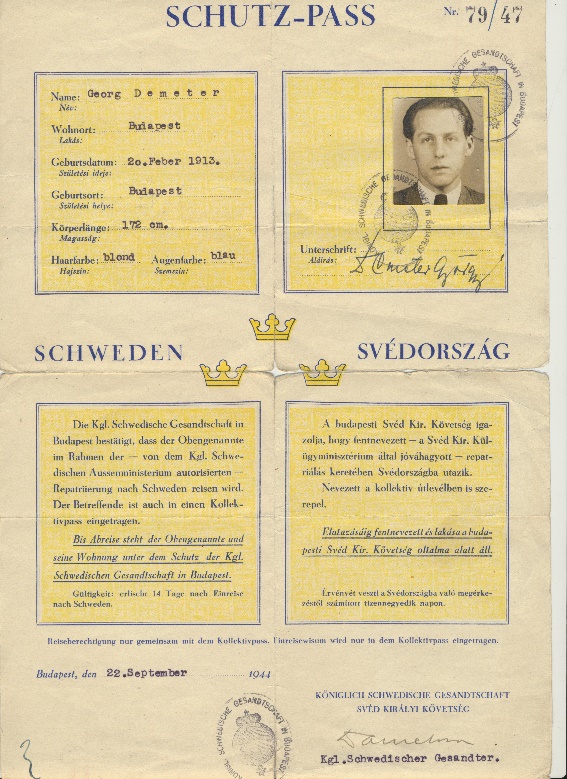
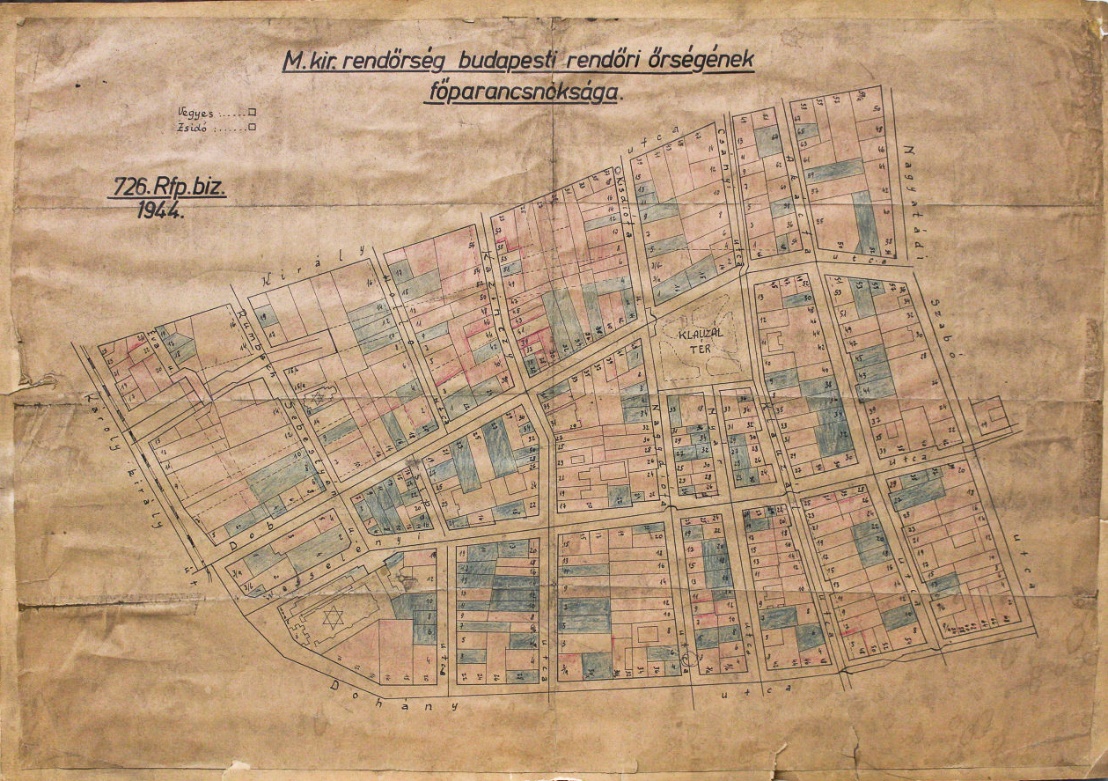
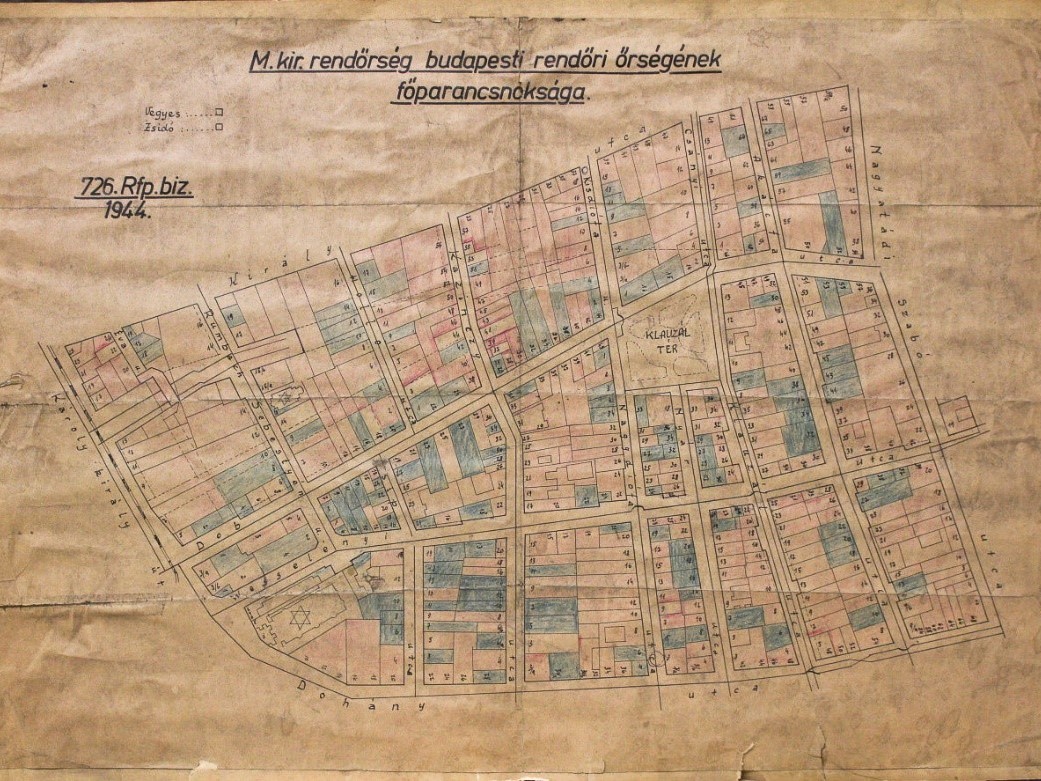
The people under diplomatic protection were moved to scattered blocks of flats in the southern part of Újlipótváros, between the Pest end of the Margaret Bridge and Szent István Park. This became the so-called “international” or “protected” ghetto. Those without a false or genuine protection certificate were crammed into a “big” ghetto in the area of Erzsébetváros, bordered by Dohány, Nagyatádi Szabó (today: Kertész) and Király Streets and Károly Boulevard.
The big ghetto
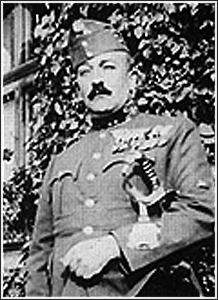
Police Chief Inspector János Solymossy was responsible for the administration of the affairs of the Budapest Jews and the establishment of the ghetto. The members of the Jewish Council, which was re-established after the Arrow Cross coup, conducted unequal negotiations with him under the leadership of Lajos Stöckler on the boundaries, supply and protection of the ghetto. The exact boundaries of the closed area were published on 29 November by Gábor Vajna, the Arrow Cross Minister of the Interior.
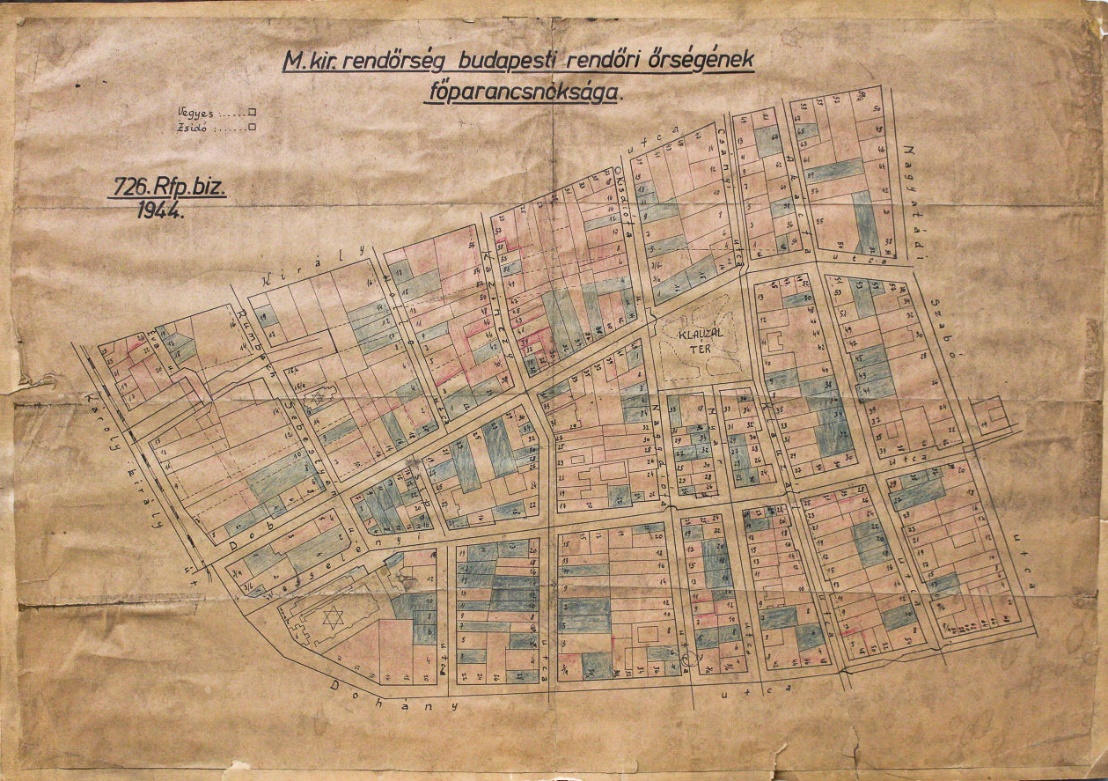
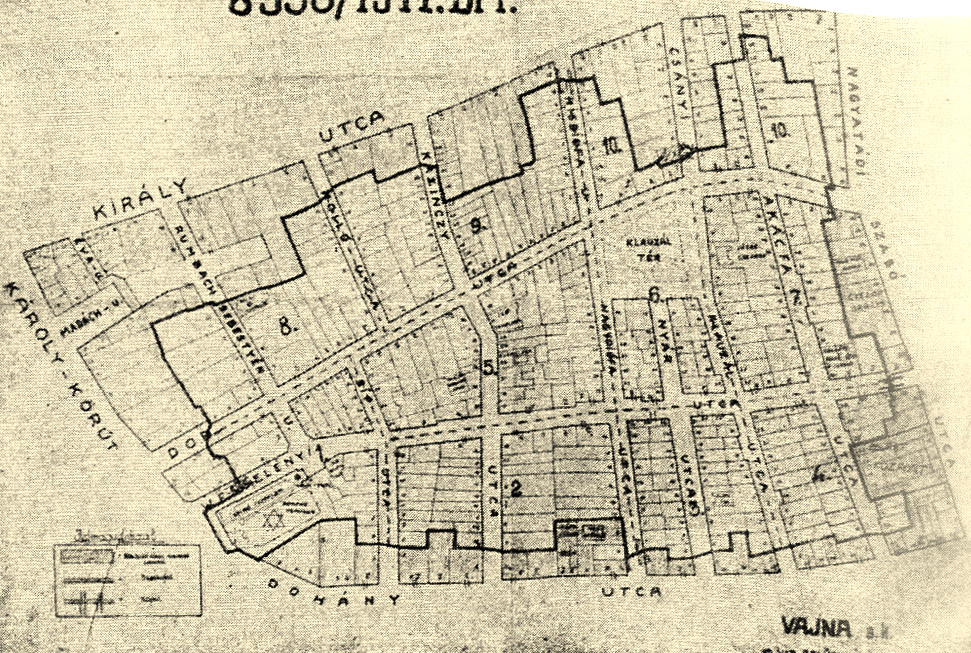
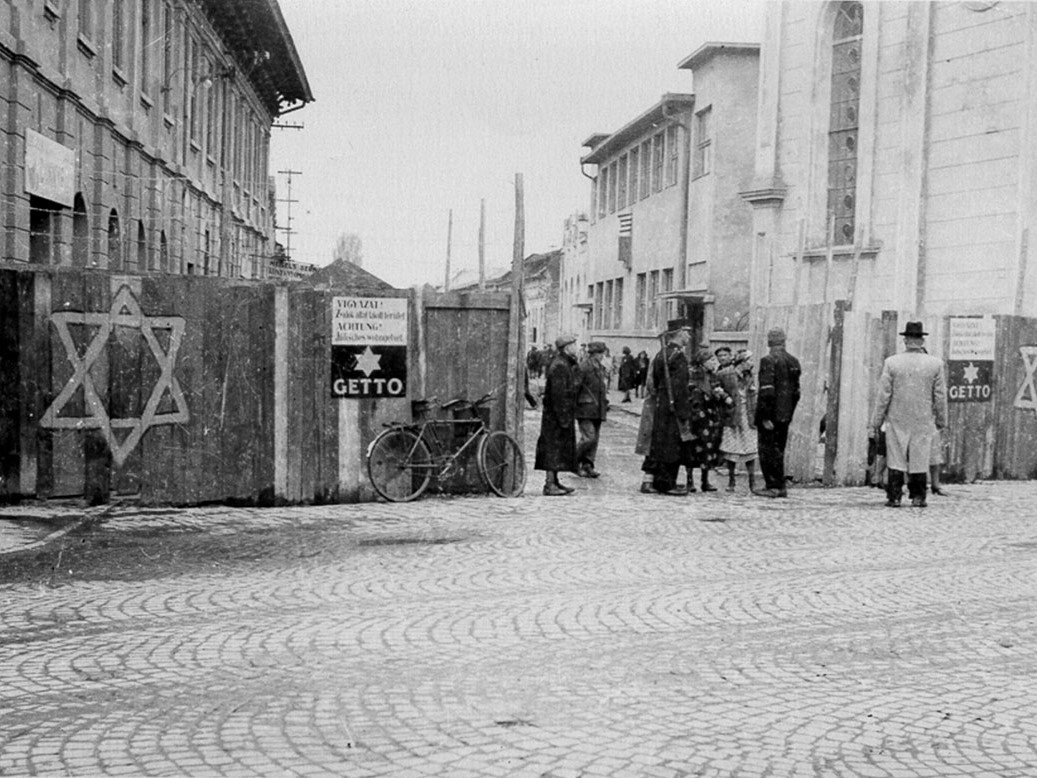
The area was sealed off on 10 December. A palisade several meters high was erected around the ghetto, with gates opening at four points. The entrances were guarded by special Arrow Cross and police units. During the relocation, Arrow Cross militiamen attacked the Jews on the move, looting and, many times, killing them. Due to the continuous raids, forced ghettoization and the partial liquidation of the protected ghetto, the number of Jews increased steadily, reaching a minimum of 70,000 in January 1945.
The ghetto consisted of 3 unbuilt plots and 288 buildings, of which 243 were habitable. Before the ghettoization, there were about 15.5 thousand people living there: 3,500 Jews and 12,000 Christians (the latter were evicted and replaced by Jews).
The situation of the inhabitants of the overcrowded ghetto continued to deteriorate. The fighting, bombing and shelling of the Soviet siege did not spare the ghetto. Food - as everywhere else in the city - was very scarce, and in the last period, there was mass starvation among the predominantly elderly, often sick, ghetto population. Arrow Cross and German raids also claimed many lives. One example was the attack on 27 Wesselényi Street on the night of 11 January 1945, when a group of about 15 armed men invaded the house. The attackers wore Hungarian and German military uniforms and Arrow Cross armbands. Jews found in the shelter were beaten, looted and then 26 women, 15 men and a small child were shot dead. A couple sleeping in apartment 5 on the 1st floor were dragged from their bed and executed. The other half of the group assaulted and looted the residents of 29 Wesselényi Street, but “only” one person was killed.
Most members of the Jewish Council did their utmost to provide medical care, food, shelter and comfort to the people languishing in the ghetto under critical conditions. Chief Rabbi Béla Berend continued to hold services during the bombing. Ottó Komoly, who had played a leading role in the Red Cross rescue operations, was deported and murdered by the Arrow Cross. A similar fate awaited Miklós Szegő, one of the most active members of the board. The Jewish Council set up and ran public kitchens and hospitals under harsh conditions. Special mention should be made of the head of its Technical Department, Miksa Domonkos, who, without a star and wearing a Hungarian military captain's uniform, posing as a liaison officer assigned by the Ministry of Defense to the Council's headquarters, forced the armed Arrow Cross fighters to retreat on several occasions. Domonkos, together with Stöckler, was present wherever he was needed until the very last day, and he tirelessly organized life in the ghetto under the most difficult conditions, demonstrating extraordinary personal courage.
The hospitals
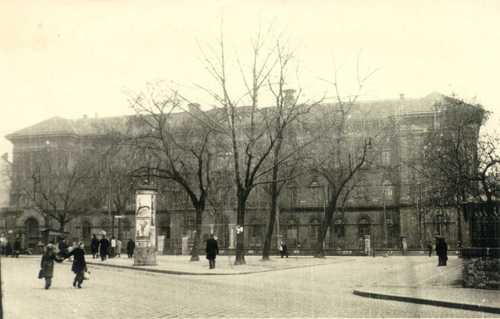
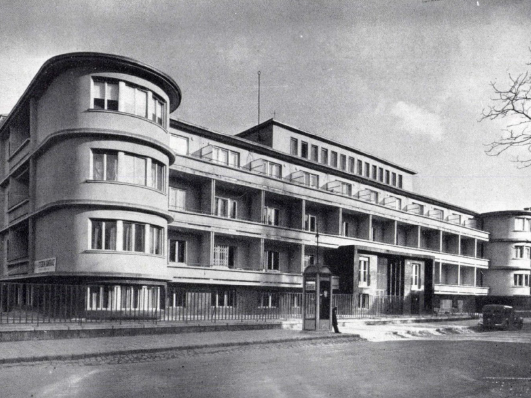
The main Jewish hospitals of the ghetto era were located outside the closed area. Before the German occupation, the Jewish hospital on Szabolcs Street was one of the best equipped modern medical institutions in the country. However, the building was seized by the occupiers. The Jewish Council was thus forced to set up two emergency hospitals, at 44 Wesselényi Street and 2 Bethlen Gábor Square. During the Arrow Cross era, these continuously operating institutions were placed under the protection of the International Red Cross in the hope that this would deter the Arrow Cross gangs. The doctors in the hospitals, defying increasingly insurmountable odds, shortages of medicine, food, water, and electricity, bombardment, and Arrow Cross attacks, cared for and treated the sick and wounded and delivered babies. György Frank and his fellow surgeons operated on dozens of wounded a day on a kitchen table covered with sheets. All the newborns survived thanks to the work of the pediatricians, led by Chief Physician Ferenc Groszmann. Deputy physician László Benedek organized the hospital with unstinting energy.
On 28 December, the Bethlen Square hospital was attacked by Arrow Cross men and SS soldiers. All Jews in the hospital were driven into the synagogue in the building. One by one, their papers were checked by the invaders in the gallery. Seeing this, two labor servicemen who were hiding in the hospital tried to escape, but were shot dead. The gunmen eventually selected 22 men and shot them in a basement in Wesselényi Street. A similar attack was carried outonthe Buda side against the Jewish hospitals on Maros and Városmajor Streets and the Jewish old people's home on Alma Street. These were also under the protection of the International Red Cross, but this did not deter the Arrow Cross thugs. In the mass executions between 11 and 19 January 1945, more than 300 people were killed.
The international ghetto
In accordance with Szálasi's policy on Jews, Jews protected by neutral countries were separated from those not under diplomatic protection. Until 20 November, Jews with protection documents (real or false) were settled in the south-western blocks of Újlipótváros, in buildings near the Pest side of the Margaret Bridge. In those days, Arrow Cross militiamen regularly ambushed, looted and abused the movers. Many were taken to the Arrow Cross house at 2 Szent István Boulevard on the edge of the designated area. Legally, there were 15,600 protected persons in Budapest, and the space allowed for them was scarce. However, due to the large number of forged protection documents in circulation, those who possessed these fakes also had to relocate. Thus, the group of buildings, which became notorious as the “international”, “protected” or “small” ghetto, soon became overcrowded to the point of being unbearable. Sometimes 50 to 60 people were crammed into a two-room flat, and the basements, attics and stairwells were full. Food was also extremely scarce and more and more people were starving.
"Hunger-stricken living dead"
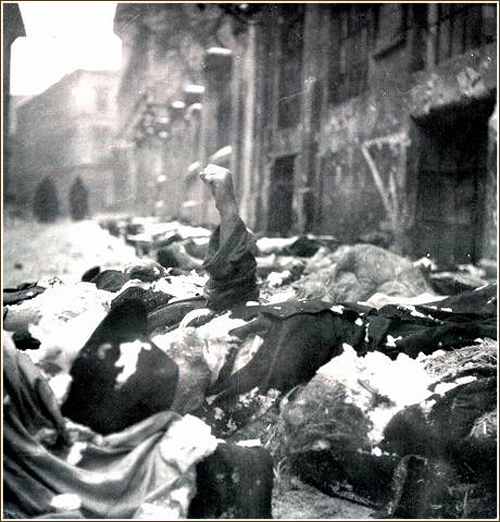
The area of the international ghetto was liberated by Soviet troops on 16 January 1945, and the large ghetto on 18 January. Jenő Lévai, a journalist who accompanied the troops, wrote: “Thousands and thousands of people fell against the cursed palisade that separated them from their homes. Crowds of yellow-starred people streamed into every part of the city. With and without luggage, looking for relatives and above all -- food ... Inside the ghetto, it's a horrifying sight: everywhere, in apartments, basements, streets and squares, hundreds of dead people lie dead. Victims of the Germans and the Arrow Cross, those fallen because of the fighting, killed by bombs and mines, lying unburied, frozen in blood. Clothed or stripped, robbed. Around them walk, rush, seemingly insensible, the half-dead, half-crazed prisoners of the ghetto, freed. Men with leaden grey, stubbled faces or beards, women with spotty, old faces, heads uncovered. After weeks of death and agony in the ghetto cellars, the hunger-stricken living dead had risen to the surface ... They came for air, for sunlight ... They cry, they pray, they run ..."
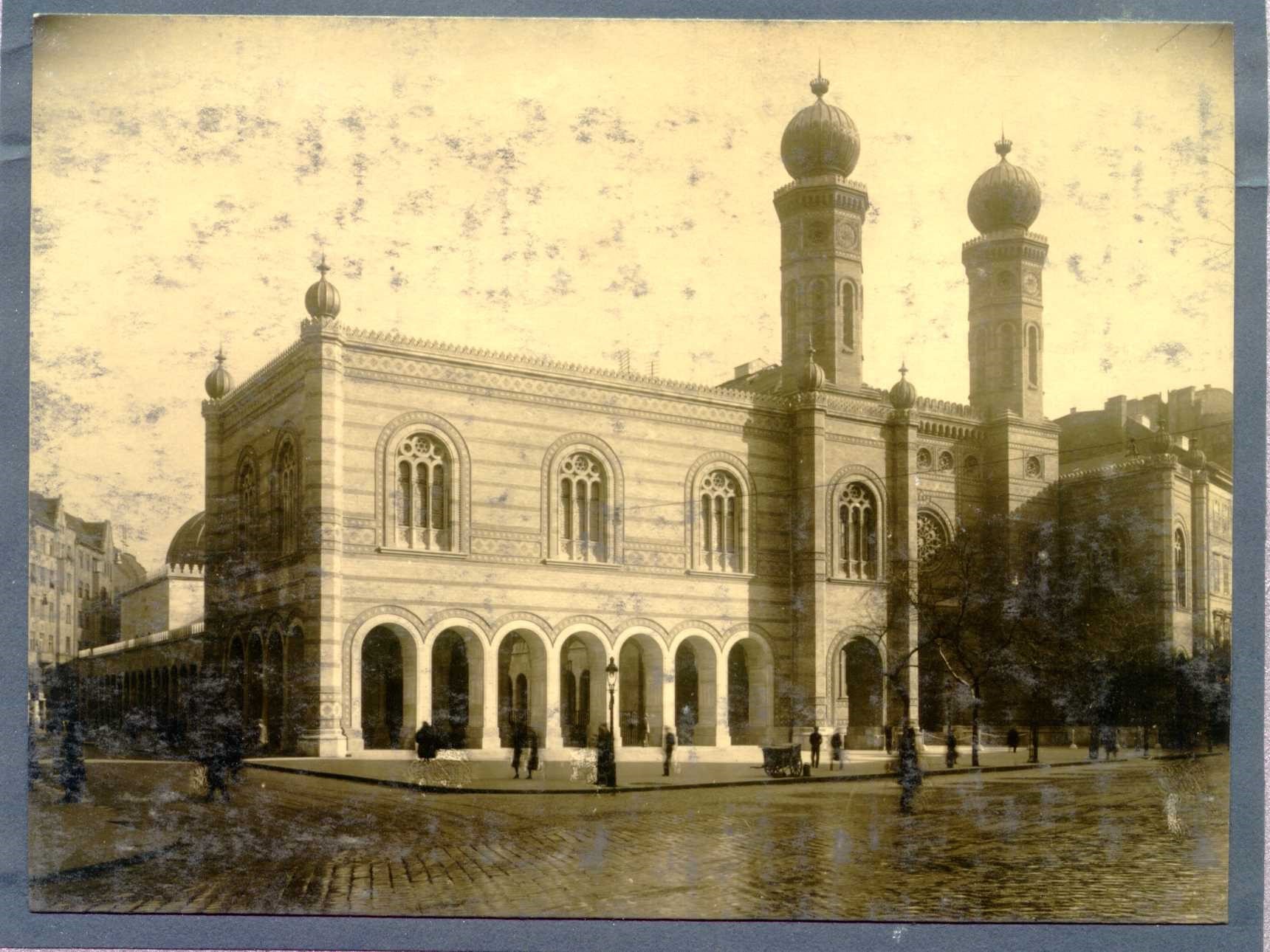
Hundreds of dead lay in the streets. Burying the bodies had been a major problem for months. During the summer, the crew of the Jewish cemetery in Kozma Street, together with the ceremonial staff, were rounded up in a raid and deported to Auschwitz-Birkenau via the internment camps in Csepeland the brick factory in Budakalász. After the Arrow Cross takeover, Jews were no longer allowed to freely visit the cemetery on the outskirts of the city, and after the ghetto was established, they were not permitted to leave the closed area. Initially, therefore, relatives were allowed to accompany the dead to the palisade, from where the Jewish Council organized their transport to the cemetery. With the closing of the Soviet military ring around Budapest at the end of December 1944, this became impossible. The bodies were buried mainly in Klauzál Square. The burials soon stopped due to the constant bombardment, the frozen ground, and the rapidly rising number of dead. The bodies were piled up in the ritual baths at 44 Kazinczy Street, in the street in front of the building and in the garden next to the synagogue on Dohány Street.
A list of the identified victims buried in the Dohány Street synagogue garden can be found here, and a list of those who were taken to Salgótarjáni Road cemetery can be found here.
“I have to hide from the Russians? Me?”
This is how Ferenc Kishont, the Hungarian-born Israeli writer, recalled the last weeks of the war he spent hiding in Budapest as a fugitive labor serviceman: “I stared for hours at the lights of the Russian gun barrages on the horizon. – ‘Come on, come on’ – I whispered into the winter night ‘For heaven’s sake, come already’” For the Jews condemned to death, the defeat of the Arrow Cross and Nazi forces meant the immediate cessation of mortal danger. Those languishing in the ghettos of Pest, those hiding in the capital, the labor servicemen were able to survive because Soviet and Romanian troops had occupied the country. The end of the fighting brought an end to the nightmarish siege for the entire Jewish and non-Jewish population of the capital. The victors also inflicted immense suffering on the country, including Jews. Thousands of civilians were murdered, tens of thousands of girls and women were raped. Half a million were deported to labor camps in the Soviet Union, from which more than half never returned. The last survivors came home only in 1955.
These sufferings also affected the Jews. The Soviets made no distinction between captured labor servicemen and Hungarian soldiers. From Kishont, the much-awaited liberator took away his watch. Despite his claim that he was a “Yid, niks soldat” (not a soldier, but a Jew), he was also taken away. After the war, Miksa Domonkos put the number of former labor servicemen who were in the Soviet Union as POWs at 25,000, but this did not include those taken from Hungary. Soviet soldiers who abused women were not interested in the religion, origin or life history of their victims. Hilda Löbl, who was in hiding in the capital during the Arrow Cross era, recalled the day she was trying to tidy up her looted and bombed-out apartment: “drunken [Soviet] soldiers come in and shoot blindly (...) I have to hide in the closet again. I sit in it and I feel terrible emptiness. I have to hide from the Russians? Me? Us?" The wife of poet Miklós Radnóti, Fanni Gyarmati, could not hide: she was raped twice by Soviet soldiers within a few days in January 1945, and the second time she was also beaten up.
Casualties
It is not easy to quantify the losses of Budapest Jews. Of the 200-220,000 Jews (including the converts) living in the capital in the spring of 1944, about 120,000 were alive in Budapest at the moment of liberation. This figure does not include the survivors of the death marches launched in November 1944 and the survivors of slave labor in West Hungary, who were still languishing in German concentration camps in January 1945. A 1946 World Jewish Congress survey, begun in the summer of 1945, found 96,500 Jews and Christians of Jewish origin in the capital. The census did not include survivors who had not yet returned to Budapest. The organizers of the census also pointed out that many people did not wish to be listed as Jews in any register after the trauma of the Holocaust, so the data is inevitably incomplete. It is therefore difficult to compare the results of the otherwise extensive survey with the 1944 estimates. The 1949 official census was the last in which it was compulsory to indicate religious affiliation. At that time there were 101,259 Israelites living in Budapest.
Before the German occupation, many of the 25,000 to 40,000 victims of the labor service were from Budapest. The number of those arrested in Budapest in the weeks after the occupation, taken to internment camps, deported to Auschwitz-Birkenau, and murdered there was in the thousands. A not insignificant number of the tens of thousands of people deported in November and December also died on the foot marches, in the forced labor camps in Western Hungary or later in the Nazi camps. In the ghetto in Pest, 3,500 people died after liberation, but even this is only a minimum number in terms of ghetto casualties, because the bodies were still being removed from the sealed-off area until December 1944. The number of victims of the Arrow Cross terror outside the large ghetto was in the thousands. What seems certain, therefore, is that the Jewish population of Budapest suffered losses in the tens of thousands between 1941 and 1945.
-
-
-
-
Budapest, Paris, Auschwitz. Budapest Jews and the Holocaust in France
-
Invasion, Police Raids, Internment. The German Occupation and the Budapest Jews
-
-
Star-Marked City. The First Ghettoization of the Budapest Jews
-
-
"In Poland, Jews are being gassed and burned." The Suspension of the Deportations
-
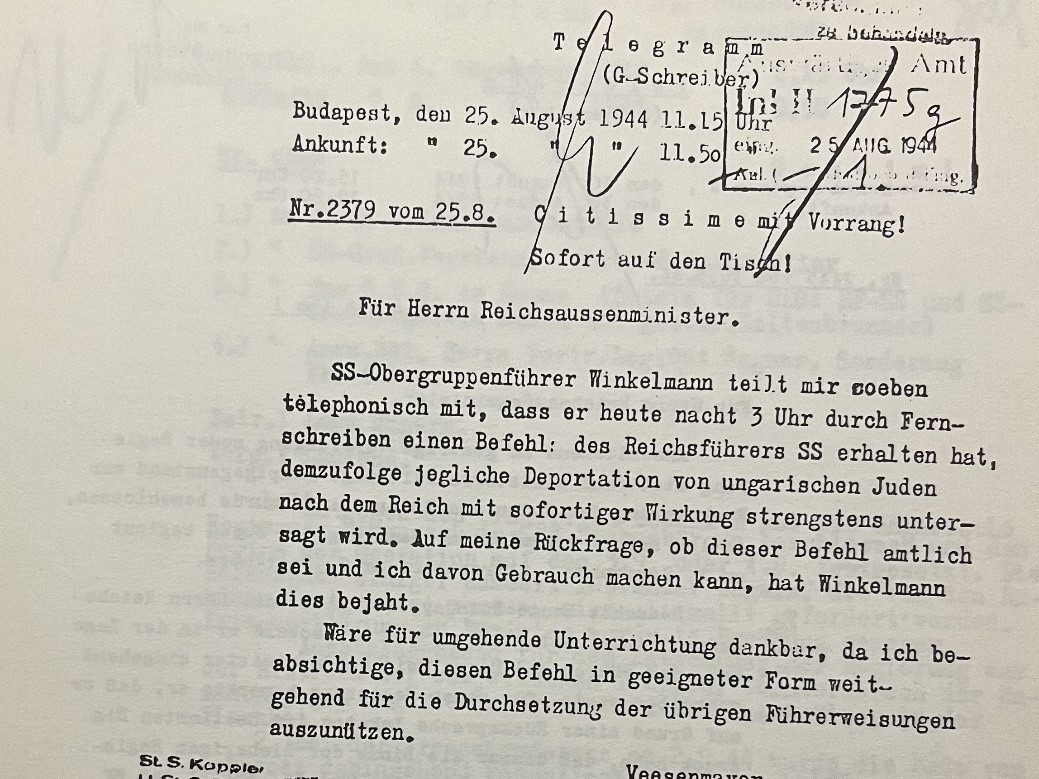
Chips on the Poker Table. The Fate of the Budapest Jews in August 1944
-
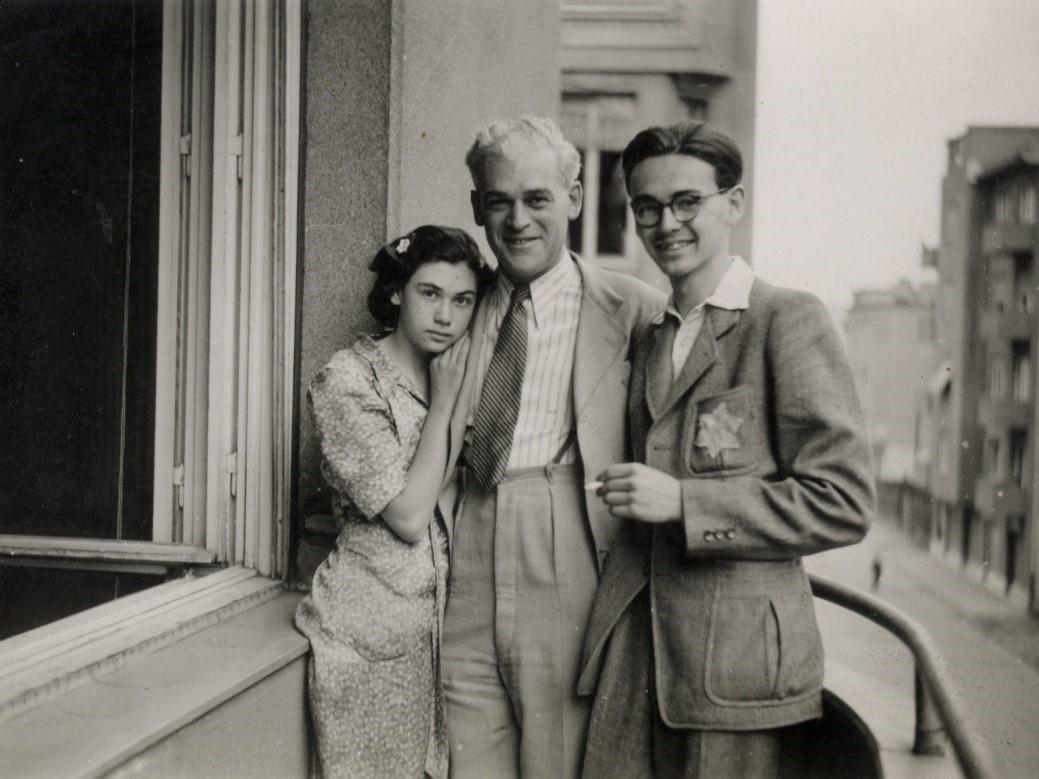
“They are being killed with gas and burned.” What did the Budapest Jews know and what could they do?
-
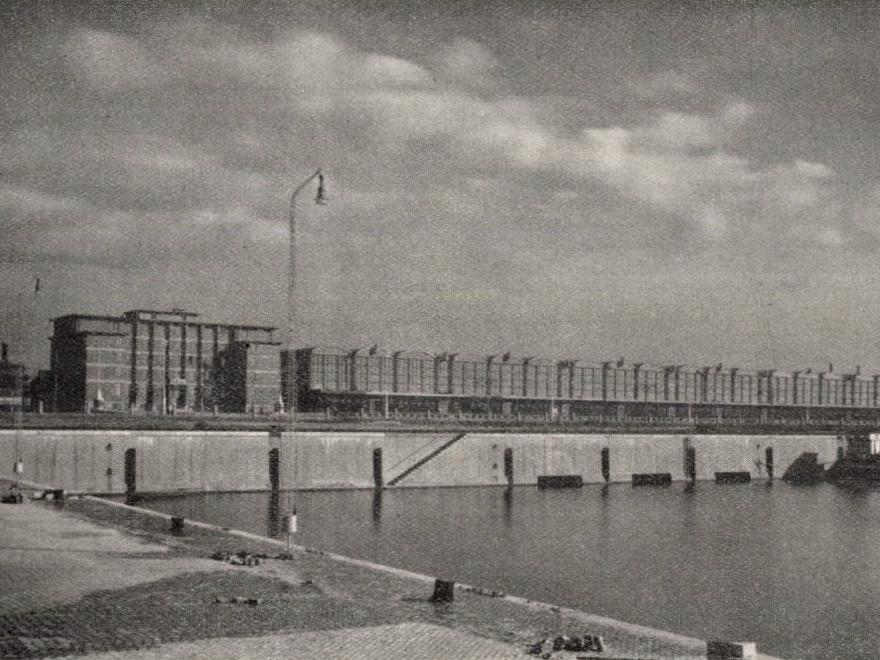
Großaktion Budapest. How would the Jews of Budapest have been Deported?
-
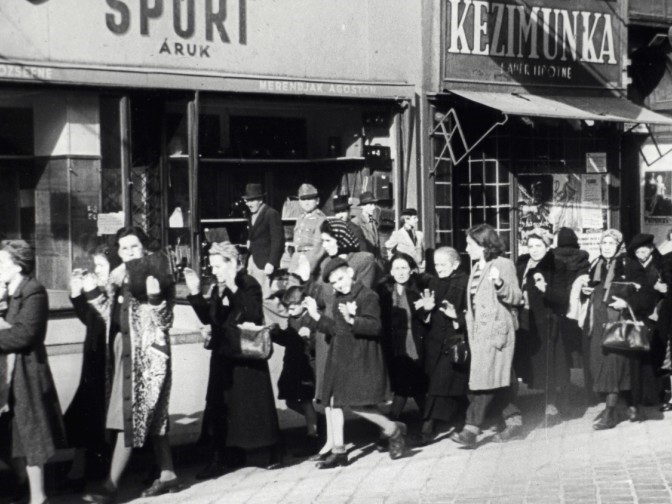
“The Danube was Red with Jewish Blood.” Arrow Cross Murders in Budapest
-
-
Death March, Brick Factory, Slave Labor. The Budapest Deportations in Late 1944
-
Ghetto and Liberation. Jews of Budapest at the End of the War
-
-
To Obey or Resist? Group and Individual Responses to Persecution in Budapest
-
-
Fates in Budapest. The Founder of the Hungarian Pharmaceutical Industry: Gedeon Richter
-
-
Fates in Budapest. The Rosenthal Saga: Forced Labor, Bergen-Belsen and the "Horror Train"